
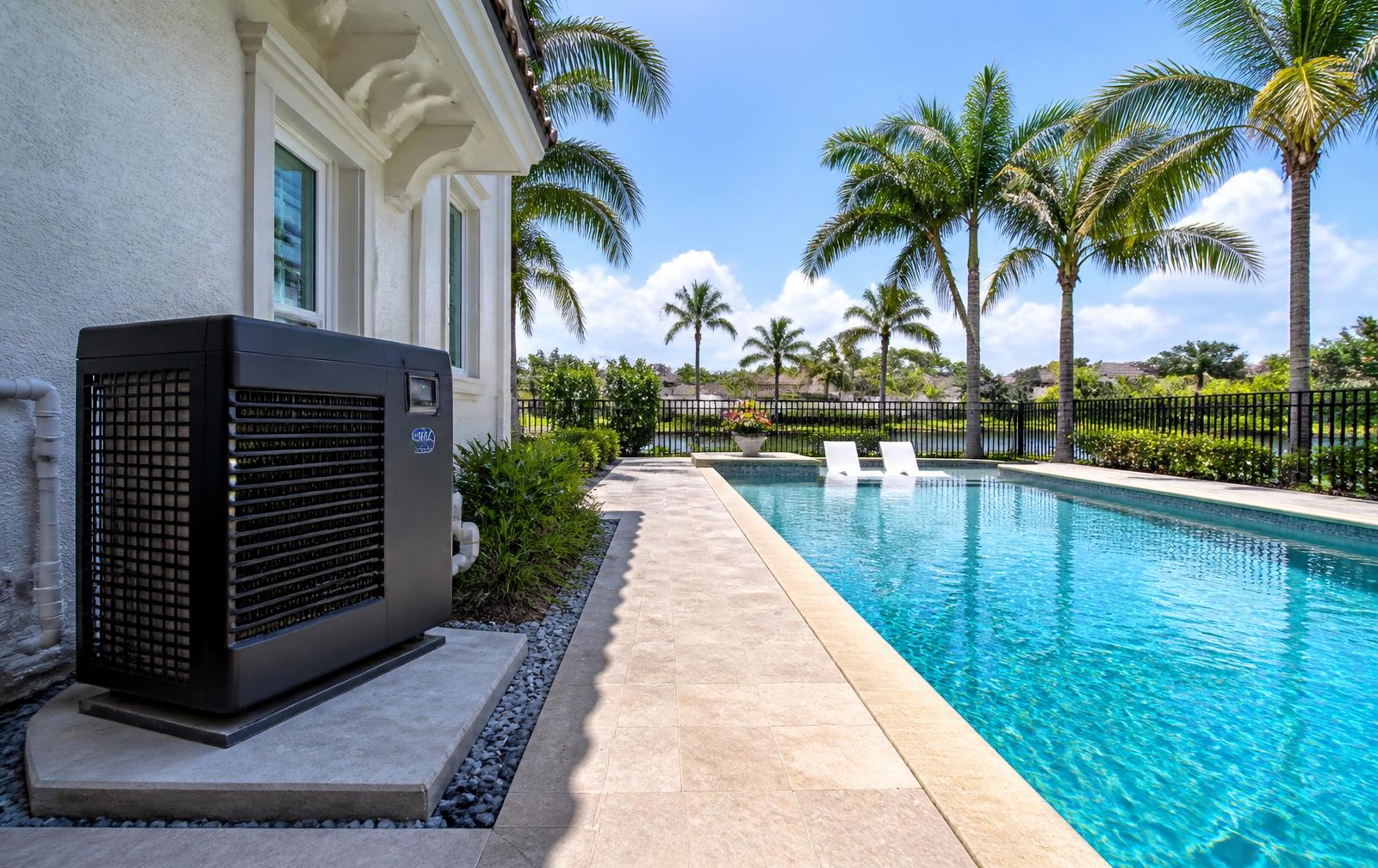
A Florida pool is unusable a surprising number of days each year, brisk mornings, cool evenings, and the entire stretch from November through March. A pool heater turns your backyard into a year-round space and lets you dial in exactly the water temperature you like. It is, dollar for dollar, one of the best upgrades a pool owner can make.
Which heater is right for you
- Pool heat pumps: the most efficient choice for our climate; they move heat from the air rather than burning fuel, and they hold a set temperature economically all season
- Gas pool heaters: the fastest way to heat a pool on demand, ideal for spas or occasional weekend use
- Hybrid setups: a heat pump for the pool and gas for the spa
What we do
- Sizing based on pool volume, surface area, and whether you use a cover
- New heater installation with proper plumbing bypass and electrical
- Replacement of failed or undersized existing heaters
- Repair and diagnostics: control boards, sensors, flow switches, titanium coils
- Seasonal service and winter startup checks
- Permitting and inspection coordination
Why we do pool heaters
A pool heat pump is the same refrigeration cycle as your air conditioner, just pointed at water instead of air. Our technicians already work on that equipment every day, which is why our repairs stick and our installs are done to the right electrical and refrigerant standards.
Common questions
- How much does it cost to run?
- A properly sized heat pump paired with a solar cover is the cheapest way to hold temperature. We'll estimate monthly operating cost during the quote.
- How long does the pool take to heat?
- A heat pump raises water temperature gradually, typically a few degrees per day. Gas heaters heat quickly but cost more per hour to run.