
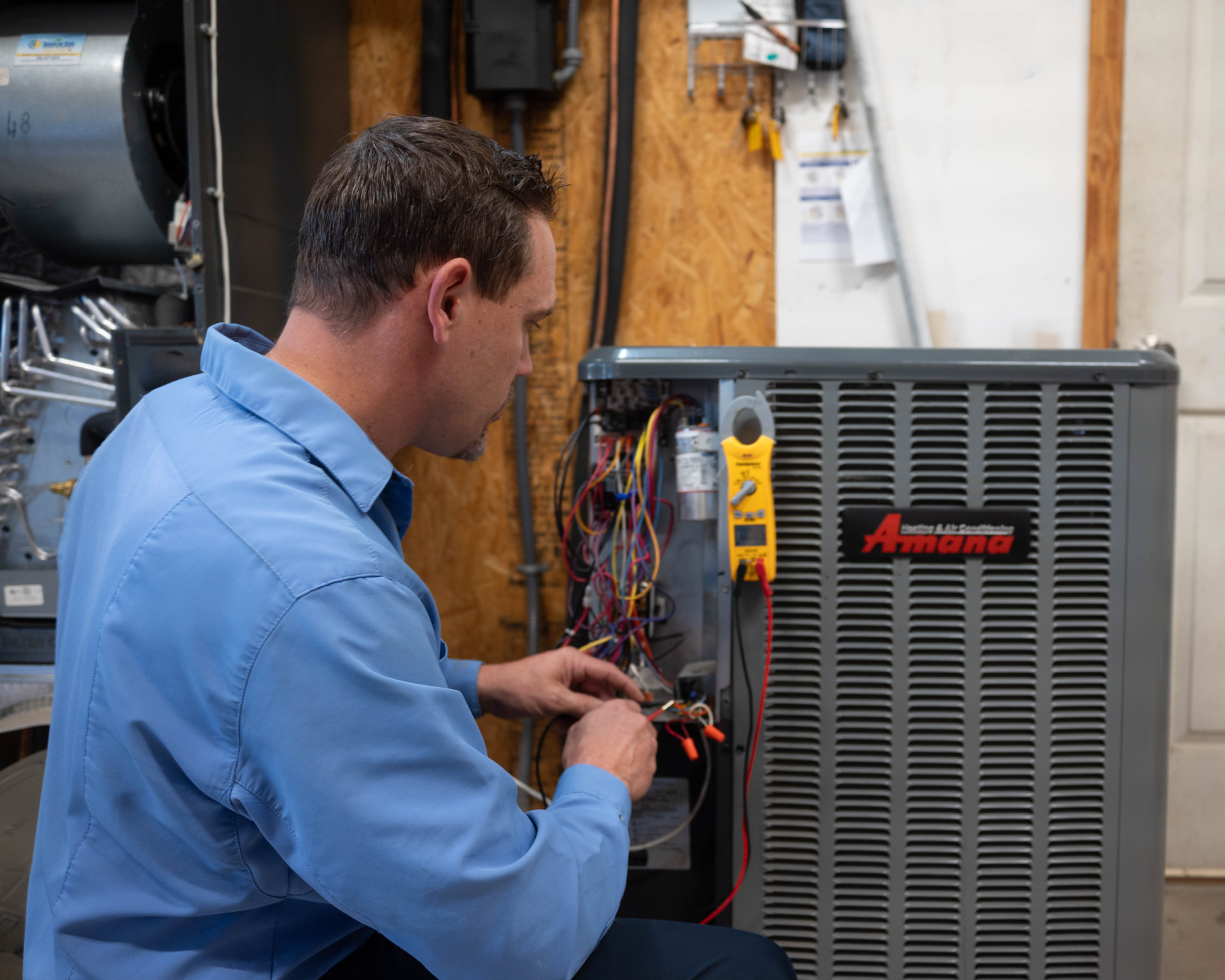
Most homes in Flagler and Volusia counties heat with a heat pump: the same outdoor unit that cools you in August reverses in January and pulls heat into the house. It's the most efficient way to heat a Florida home, but it has parts that only get used a few weeks a year, reversing valves, defrost boards, auxiliary heat strips, and those are the parts that quietly fail.
What we handle
- Heat pump repair, replacement, and full system installs
- Reversing valve and defrost control diagnostics
- Auxiliary and emergency heat strip testing
- Gas furnace repair, safety inspection, and replacement
- Dual-fuel hybrid systems that switch to gas on the coldest nights
- Pre-winter heating tune-ups
Signs your heat needs attention
- A burning smell the first time you run heat each season
- The house only warms up when 'emergency heat' is selected
- The outdoor unit ices over and never clears
- Electric bills that spike sharply in winter months
- The system blows cool air when calling for heat
Why heat pumps make sense here
Our winters rarely go below freezing for long, which is the exact range where heat pumps are at their most efficient, moving heat rather than burning fuel to create it. A modern variable-speed heat pump can deliver three to four units of heat energy for every unit of electricity it consumes.
Common questions
- Should I get my heat checked if I barely use it?
- Yes, a system that sits unused for eleven months is the one most likely to fail on the first cold night. A fall tune-up catches it.
- Why is 'emergency heat' so expensive?
- Emergency heat runs resistance heat strips, which use several times the electricity of the heat pump itself. If it's running constantly, something is wrong.