
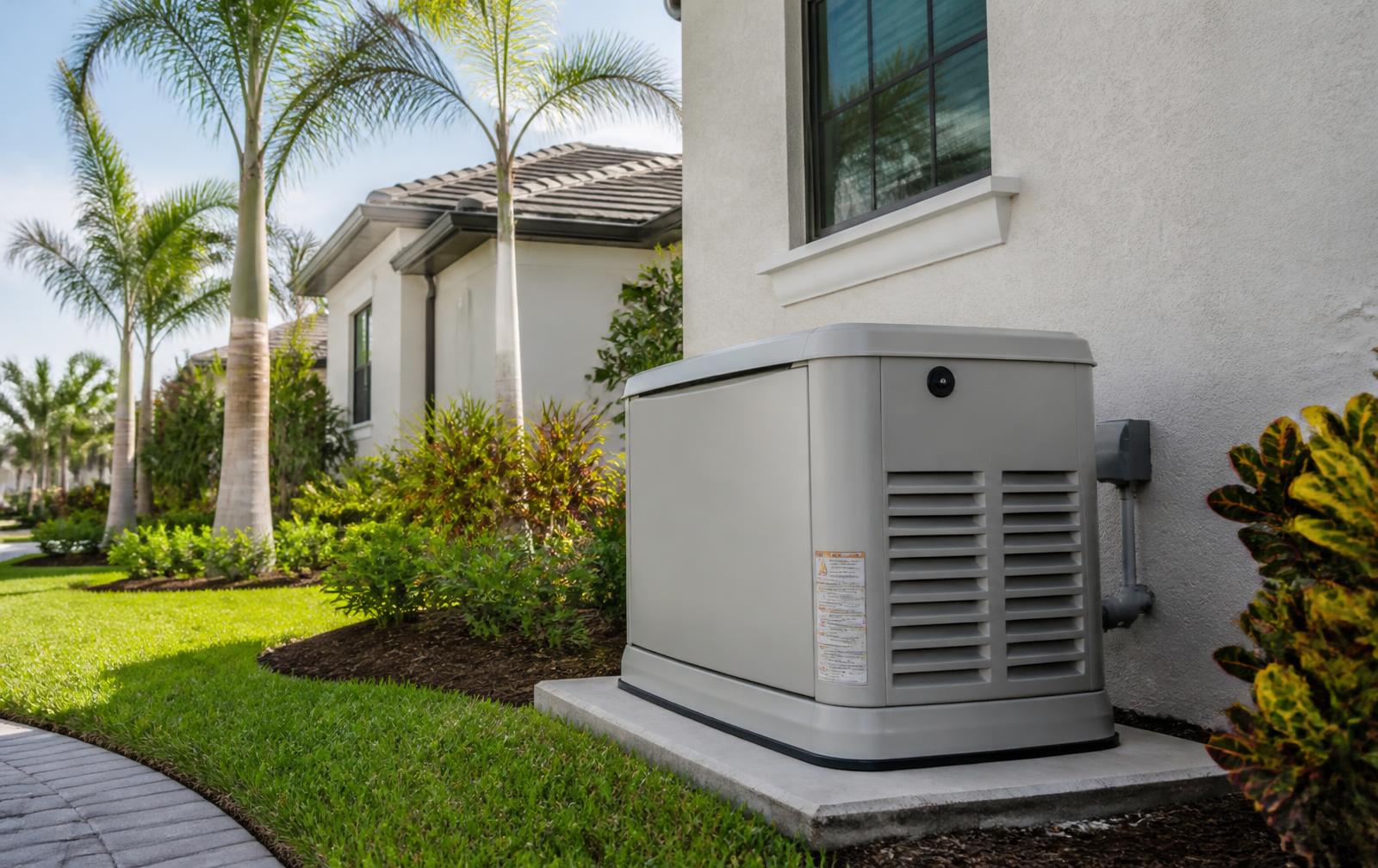
With a whole home standby generator, you'll never have to worry about disruptions during hurricanes, tropical storms, or routine outages. The unit sits outside like a second AC condenser, monitors utility power, and starts automatically within seconds of an outage, whether you're home or not. When utility power returns, it switches back and shuts itself down.
What a standby generator protects
- Air conditioning: the difference between staying home and evacuating in August
- Refrigerator and freezer contents
- Well pumps, septic pumps, and sump pumps
- Medical equipment, CPAP machines, and refrigerated medication
- Internet, security systems, garage doors, and lighting
- Sensitive electronics protected from dirty power and surges
Our installation process
- Load assessment: we calculate what you actually need to run, and for how long
- Whole-home or essential-circuits configuration, sized to your budget
- Concrete or composite pad, correct clearances, and hurricane-rated anchoring
- Automatic transfer switch installation and utility coordination
- Natural gas or propane fuel connection by licensed trades
- County permitting and inspection handled start to finish
- Startup, load testing, and a walkthrough of the controls with you
Generator maintenance
A generator that hasn't been serviced is a generator that won't start when you need it. We offer annual service, oil and filter change, plug, battery test, and a full load test, so the unit is ready before hurricane season, not during it.
Don't let power outages catch you off guard. Call us for a free assessment and we'll tell you exactly what size unit your home needs.
Common questions
- How big a generator do I need?
- It depends on whether you want whole-home coverage or just essentials like the AC, kitchen, and well pump. We run the load calculation during a free site visit.
- Natural gas or propane?
- If your street has natural gas, that's usually the easiest, no tank to refill. Otherwise we size a propane tank for the runtime you want.
- How quickly does it kick on?
- Typically within 10–20 seconds of losing utility power, automatically, with no action from you.